
Five dollars an acre
Fifteen hundred Black farmers in north Louisiana bought the land, put up the building, and ran the school for two terms before they asked anybody for help.
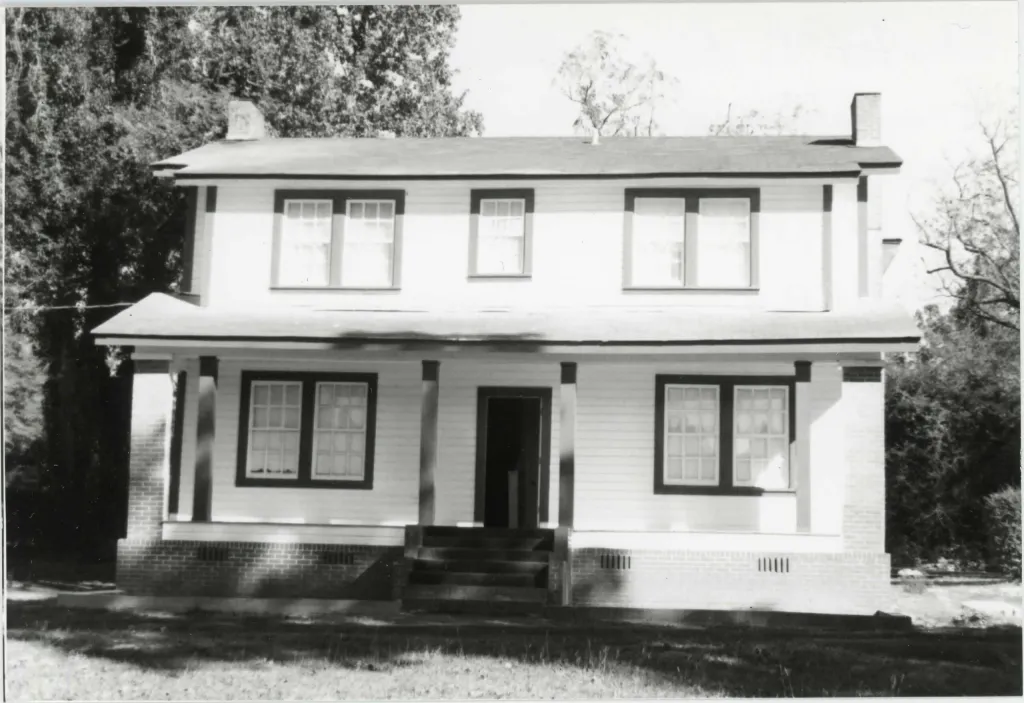
The original school building, Lincoln Parish, Louisiana.
By the 1890s Louisiana had colleges for Black students. Leland, Straight and New Orleans University in New Orleans. Southern in Baton Rouge. Every one of them in the southern half of the state.
North Louisiana had none. Not a college, not a normal school, not much of anything past the lower grades.
In 1896 a group of Black farmers in Lincoln Parish organized the North Louisiana Colored Agricultural Relief Association under a man named Lafayette Richmond. Accounts put its membership around fifteen hundred. Many of its members had been born into slavery.
The Association had several purposes. One of them was to build a school for their own children.
They bought it
The Association did not petition a state that had no intention of building them anything. It did not wait for a mission society.
It bought land.
Twenty-three acres, at five dollars an acre, from a man named John Monk — a Black man — on November 21, 1898.
Then the members built a two-story building on it, to serve as both a school and a meeting place. Then they ran a school in it. For two terms.
Only after those two terms did they write to Booker T. Washington at Tuskegee, and what they asked for was not money. They asked him to send somebody who knew how to organize a school.
The man Washington sent
The answer arrived in the person of Charles Phillip Adams.
Adams was born in Brusly, Louisiana in 1873, the son of former slaves. He made money bartering and farming alongside his uncles until he had enough to pay for school, and enrolled at Tuskegee at twenty-two. He was a student of Washington's.
He stood six feet ten inches and weighed three hundred pounds.
He had been planning to go to law school. Washington talked him out of it — told him founding a school for Black people would be worth more than practicing law.
On November 1, 1901, the Colored Industrial and Agricultural School opened with Adams as president and two teachers. He held the presidency for thirty-five years.
That school is Grambling State University.
Where the sources break
Here is a thing worth saying plainly, because it is the kind of thing outlets usually paper over.
The record of how Grambling got its land does not agree with itself.
The African American Registry and BlackPast both say twenty-three acres from John Monk, a Black man. Clio, a public-history platform, says twenty-five acres from P. G. Grambling, a white sawmill owner — the man the town is named for. One reference work says the Association donated the land in 1901. Membership is given as fifteen hundred in some accounts and around one hundred fifty in others. One source dates the Monk purchase to 1888 rather than 1898.
Grambling State University's own history page does not mention the land purchase at all.
These are not compatible stories. Either a Black farmers' association bought its own ground from a Black landowner, or a white sawmill operator provided it. Those are different foundings, and the difference is the whole meaning of the place.
The answer is in the Lincoln Parish conveyance records. That is a specific building with specific books in it, and we intend to go read them.
Until then, this outlet will report the disagreement rather than pick the version that sounds best.
What is not in dispute
Black farmers in north Louisiana organized themselves in 1896 because the state had built nothing for their children.
They opened a school and taught in it before any institution helped them.
And when they finally wrote to the most famous Black man in America, they did not ask him for money.
Sources: African American Registry, "Grambling State University is Founded" · BlackPast.org, "Grambling State University (1901– )" · Clio, "Charles P. Adams Hall" · Grambling State University Office of the President, institutional history · Louisiana historical marker, Charles P. Adams, Grambling Walk of Fame.
Corrections and additions: whnn@willieherman.com
← All WHNN stories