
Highwood
The oldest building on Florida A&M's campus houses the state's Black archives. It stands where the plantation house stood.
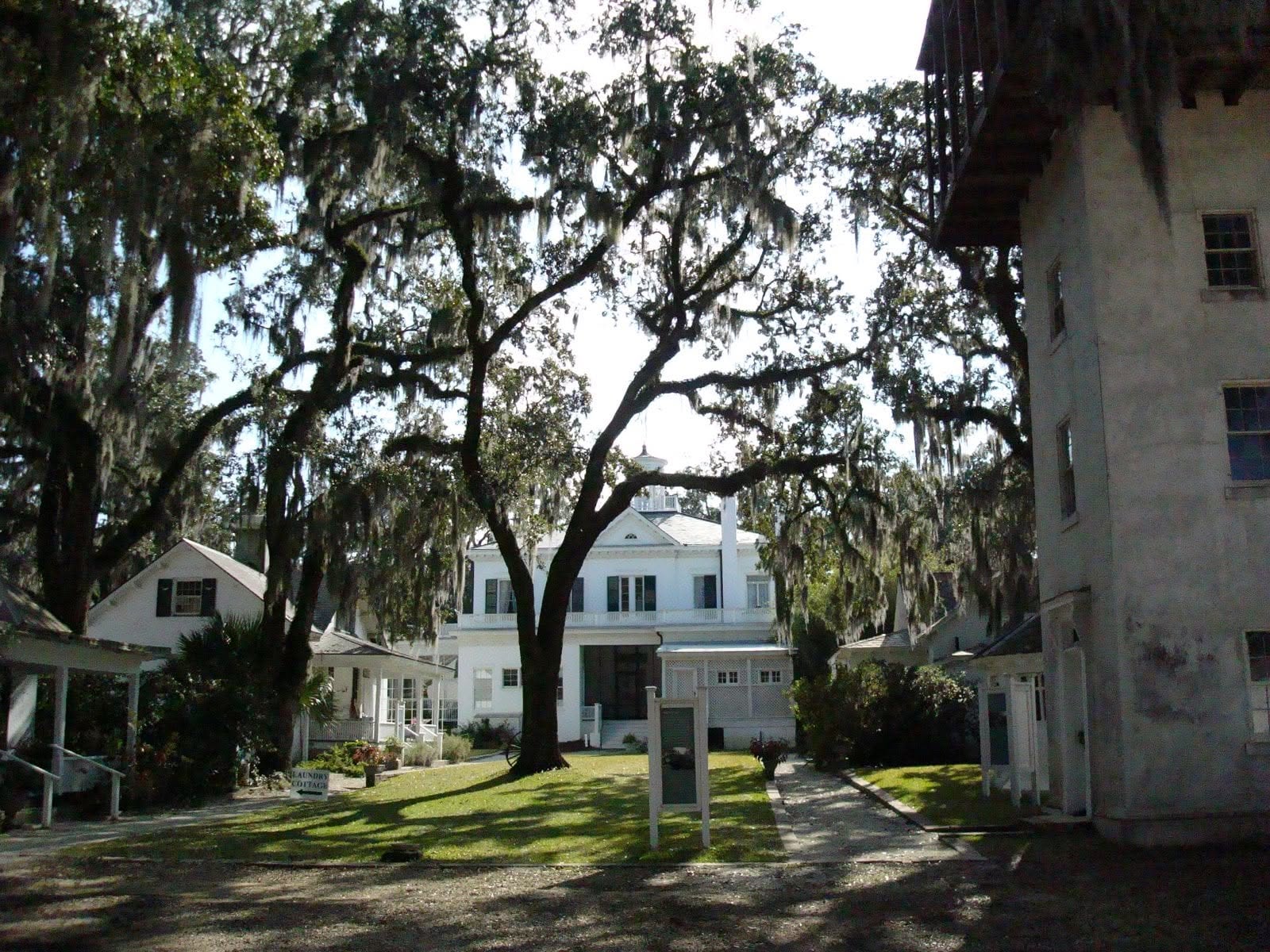
The Carnegie Library at Florida A&M, built on the site of the Duval plantation house.
In 1891, Florida moved its State Normal College for Colored Students from a rented site west of Tallahassee to a hill on the south side of town. It was the highest hill in the city. It had a name already.
The name was Highwood. It was the plantation of William Pope Duval, the first civilian territorial governor of Florida, and he had held people in slavery on it.
That is the ground. A state college for the children and grandchildren of enslaved people, placed on a governor's slave plantation, on the best land in the capital.
Why Tallahassee
The location was not sentiment and it was not apology. It was arithmetic.
Leon County and the counties around it led Florida in African American population. They led because Tallahassee had been the center of the state's slave trade. The people the college was built to educate were in Leon County because their grandparents had been sold there.
Florida put the school where the students were. The reason the students were there is the reason nobody puts in the brochure.
The house
Duval's mansion did not come down when the college moved in. It became the most important building on campus.
The mansion held the library. It held the administrative offices. It held the cafeteria. Students ate in the planter's house and studied in it, and it was known as Duval Hall.
It burned in 1905.
Andrew Carnegie gave $10,000 for a replacement library, and the new building went up on the site. That library still stands. It is the oldest building on campus, and today it holds the Meek-Eaton Black Archives Research Center and Museum — the largest repository of African American history in the Southeast.
Follow the sequence and it is almost too neat to write down. The governor's house became the college's library. The library burned. A new library rose on the ash. And the building on that spot is now where Florida keeps the record of Black life in the state.
What was on the grounds
There was a tree on the southwest side of the library with a chain around it.
Ernest Eaton, who founded the Black Archives, told the campus newspaper in 2004 that the chain was removed by the daughter of a former president and never seen again. The tree was cut down during another president's term because the space was needed.
W.E.B. Du Bois came to the campus in 1914 and again in 1939. On the second visit he said he was astonished — that a ramshackle collection of a few buildings and indifferent students had become magnificent buildings and a thousand college students.
The magnificent buildings went up between 1924 and 1940, on the plantation.
The open question
Sources do not agree on how large Highwood was. A scholarly architectural reference puts it at forty acres. Other accounts put it at three hundred seventy-five. The state historical marker gives no figure at all.
That gap is not a rounding error, and it is not trivial. The size of a plantation is a measure of how many people were held on it.
The answer is in the Leon County deed records. We are going to go get it.
Sources: Florida Department of State historical marker F-397, Florida A&M University · SAH Archipedia, Florida Agricultural and Mechanical University Historic District · The FAMUAN, "Plantation FAMU," February 2, 2004 · National Register of Historic Places listing, May 6, 1996.
Corrections and additions: whnn@willieherman.com
← All WHNN stories